News
HOME>News
Powerful Alliance! The Global Link Platform Builds a "Cooperation Ecosystem" for the Global Energy and Chemical Industry, with Over 2,000 Partners Jointly Building an International Supply Chain

Powerful Alliance! The Global Link Platform Builds a "Cooperation Ecosystem" for the Global Energy and Chemical Industry, with Over 2,000 Partners Jointly Building an International Supply Chain

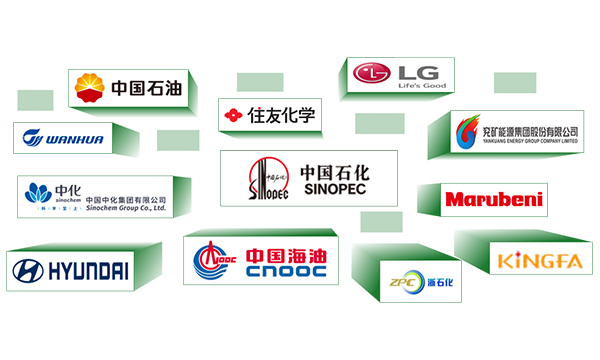
Under the Tide of Globalization, Chinese Supply Chain Enterprises Demonstrate Strong Resource Linking Capabilities. Against the backdrop of globalization, Chinese supply chain enterprises are showcasing robust capabilities in resource connection. Platforms represented by "Linking the Globe" under Shanghai Linker are leveraging their global network channels to build a vast cooperative ecosystem covering over 2,000 energy and chemical enterprises.  The core advantage of the Linker platform lies in its powerful global information processing and optimal allocation capabilities, which can effectively reduce costs and enhance efficiency in cross-ocean logistics, thereby gaining a favorable position in the fierce international competition. Its positioning as the "China Representative" has also been widely recognized by the market.  As of 2025, its list of partners boasts an impressive lineup, including not only domestic industry leaders such as PetroChina, Sinopec, and Wanhua Chemical, but also multinational corporations like LG and Sumitomo. This resource siphoning effect signifies that the Linker Supply Chain Platform has entered a new stage of competing and cooperating on the same stage with international giants.  Global channel network with over 2,000 energy and chemical partners  By establishing global information collection and processing channels, Linker optimizes cross-ocean logistics and resource allocation, striving to become the China Representative among global international supply chain companies in the energy and chemical sector. As of 2025, its partners include PetroChina, Sinopec, LG, Sinochem, CNOOC (China National Offshore Oil Corporation), Yankuang Group, HYUNDAI, Wanhua Chemical, Sumitomo, and others.

View more

Building a New Benchmark for Digital Logistics: Shanghai Linker Group Constructs a Full-Chain Service Ecosystem for Gas Chemicals

Building a New Benchmark for Digital Logistics: Shanghai Linker Group Constructs a Full-Chain Service Ecosystem for Gas Chemicals

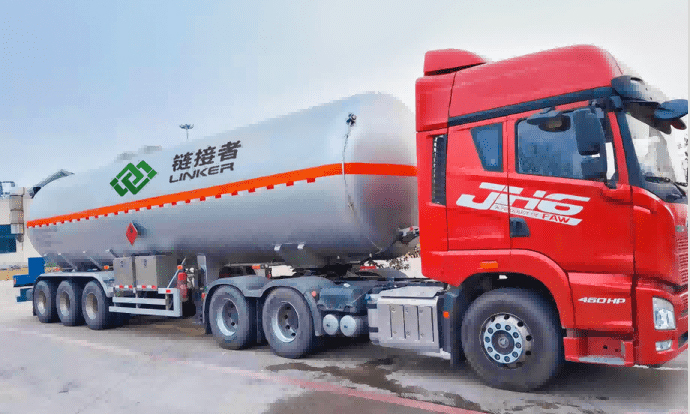
Shanghai Linker Group owns a number of LPG (Liquefied Petroleum Gas) futures delivery warehouses accredited by the Dalian Commodity Exchange, as well as China's first and only leading LPG competitive trading platform. It has built a full-chain logistics system covering vehicles, ships and warehouses, and realized intelligent logistics online dispatching that deeply integrates information flow and operations by leveraging cutting-edge technologies such as the Internet of Things (IoT), blockchain and cloud computing. The group has 23 dedicated LPG ships under equity participation or time charter. The number of hazardous chemical ships under its integrated dispatching exceeds 30, with a total controlled shipping capacity of over 100,000 cubic meters. It also dispatches more than 1,000 hazardous chemical transport vehicles in a comprehensive manner, with a total storage capacity of over 400,000 tons.     Through long-term leasing, cooperation, equity participation and other models, the company owns a number of gas and liquid chemical storage warehouses in Dongying, Qingdao, Taixing, Jiangyin, Ningbo and other places. It controls nearly 30% of the rare shipping capacity in the market, ensuring precise transportation and storage tracking in all links of goods delivery from warehouse to warehouse and door to door, while building a full-process digital logistics ecosystem featuring green low-carbon, energy conservation and environmental protection. By aggregating resources of hazardous chemical vehicles, ships and warehouses as well as massive historical data, the group breaks the boundaries of traditional logistics. It realizes intelligent logistics online dispatching that deeply integrates information flow and operations by using advanced technologies like IoT, blockchain and cloud computing, reshaping the logistics development and division of labor system. It provides customers with efficient and low-cost visualized information management & control and algorithm application services, ensures precise transportation and storage tracking in all links of goods from warehouse to warehouse and door to door, and constructs a green low-carbon, energy-saving and environment-friendly digital logistics ecosystem. Linker has a strategic partnership with COSCO Shipping Dalian Investment Co., Ltd., and jointly owns a gas shipping company. Through investment, joint venture, time charter, bareboat charter and other methods, Linker has established a domestically leading fleet of hazardous chemical gas ships, a team of transport vehicles, and storage resources. It also owns a number of LPG futures delivery warehouses recognized by the Dalian Commodity Exchange.

View more

Major Breakthrough Achieved in Cross-Border Hazardous Chemicals Logistics Corridor Between China and Russia: Tongjiang SCO International Logistics Industrial Park Project Officially Launched

Major Breakthrough Achieved in Cross-Border Hazardous Chemicals Logistics Corridor Between China and Russia: Tongjiang SCO International Logistics Industrial Park Project Officially Launched

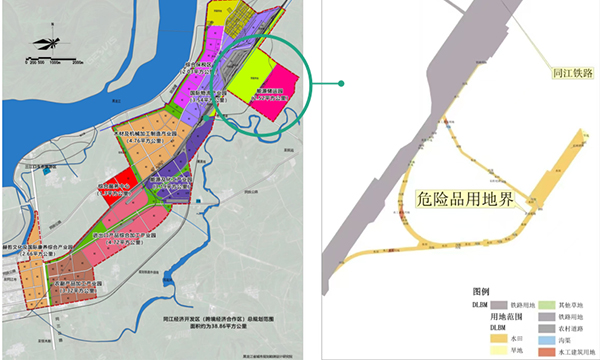
Recently, led by Qingdao SCO Gulf Energy Co., Ltd., and jointly participated by multiple central and state-owned enterprises (SOEs) including Shandong Hi-Speed Group, China Railway 14th Bureau Group, and Heilongjiang Shipping Group, the construction of the SCO International Logistics Industrial Park with an annual turnover capacity of 1 million tons was officially launched at the railway port of Tongjiang City, Heilongjiang Province.This project will be equipped with production facilities for MTBE (Methyl Tert-Butyl Ether), high-end polyolefins, and other products, and will build a comprehensive industrial park integrating storage, transportation, and processing functions. It marks a crucial step in the upgrading of border trade infrastructure between China and Russia.  Fill the Gap in Hazardous Chemicals Inland Port Development  It is understood that among the 13 land-border railway ports approved by the State Council of China, only Manzhouli Port currently has limited hazardous chemicals transshipment capacity, and it is restricted to a single type of LPG (Liquefied Petroleum Gas). The implementation of the Tongjiang Project will completely change this situation: it will become the first inland port at the China-Russia border with large-scale transshipment functions for multiple types of hazardous chemicals, significantly enhancing the logistics support capacity for cross-border hazardous chemicals.  Break Through the Bottlenecks in China-Russia Supply Chains  Customs data shows that from January to October 2023, the trade volume between China and Russia reached 196.482 billion US dollars, a year-on-year increase of 27.7%, and the demand for railway transportation continued to surge. By constructing dedicated broad-gauge railway lines for hazardous chemicals and clean energy storage areas, this project effectively addresses the issue of track gauge differences between China and Russia, providing an efficient channel for the cross-border transportation of chemical products.  Industry insiders point out that Tongjiang Port is adjacent to the gas source areas in Russia’s Far East, and the Tongjiang SCO International Logistics Industrial Park is equipped with dedicated broad-gauge railway lines for hazardous chemicals and clean energy storage areas. Compared with other ports, Tongjiang has greater comprehensive advantages in terms of proximity to the gas sources in Russia’s Far East, and the implementation of this project will strongly support the sustained growth of China-Russia trade.  At present, relevant enterprises have completed the preliminary planning of the project. It is expected that after completion, the project will form a full industrial chain layout covering energy storage and transportation as well as chemical production, further strengthening China’s cross-border logistics hub function in the northern border region.  

View more